The Green Desk
Sensory Gardens
What is a sensory garden?
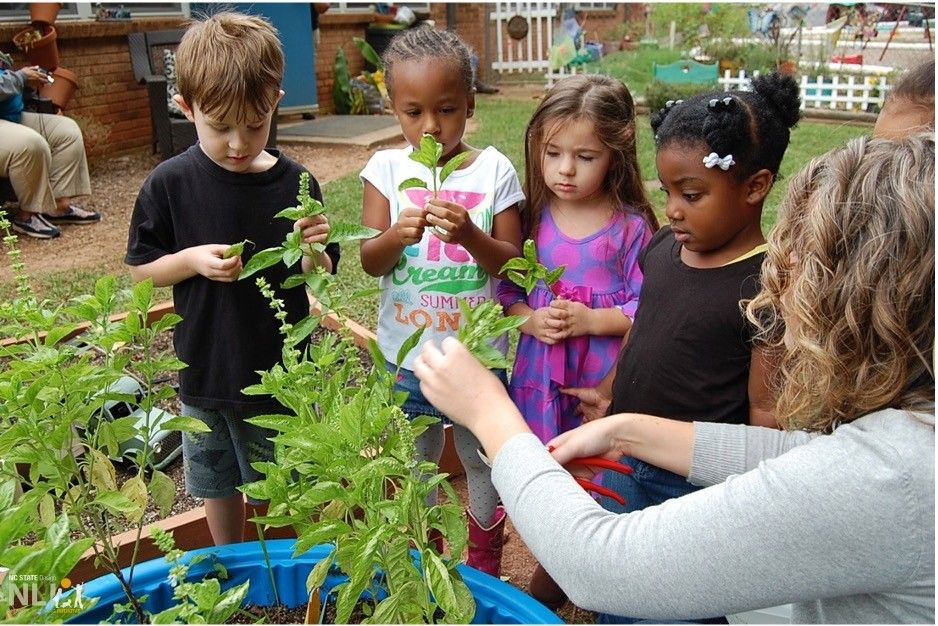
Sensory gardens provide intimate spaces where young children can be immersed in the scents, textures and colors of plants and related elements. Along with specially selected plants, sensory gardens may also include elements such as wind chimes, wind socks, flags, and children’s art. Two popular forms of sensory gardens are sensory pathways and keyhole gardens.
Sensory pathways
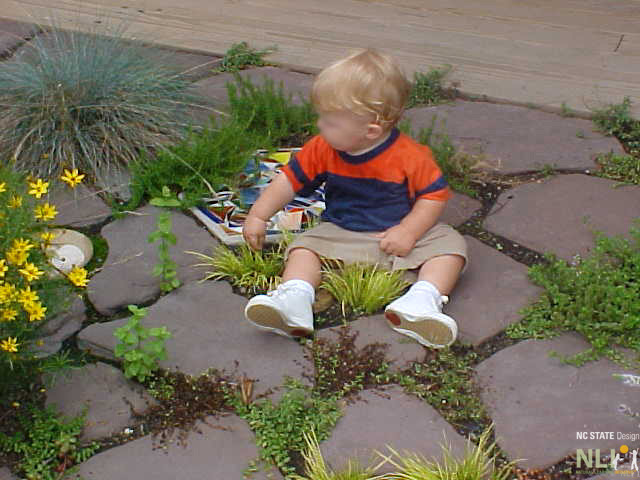
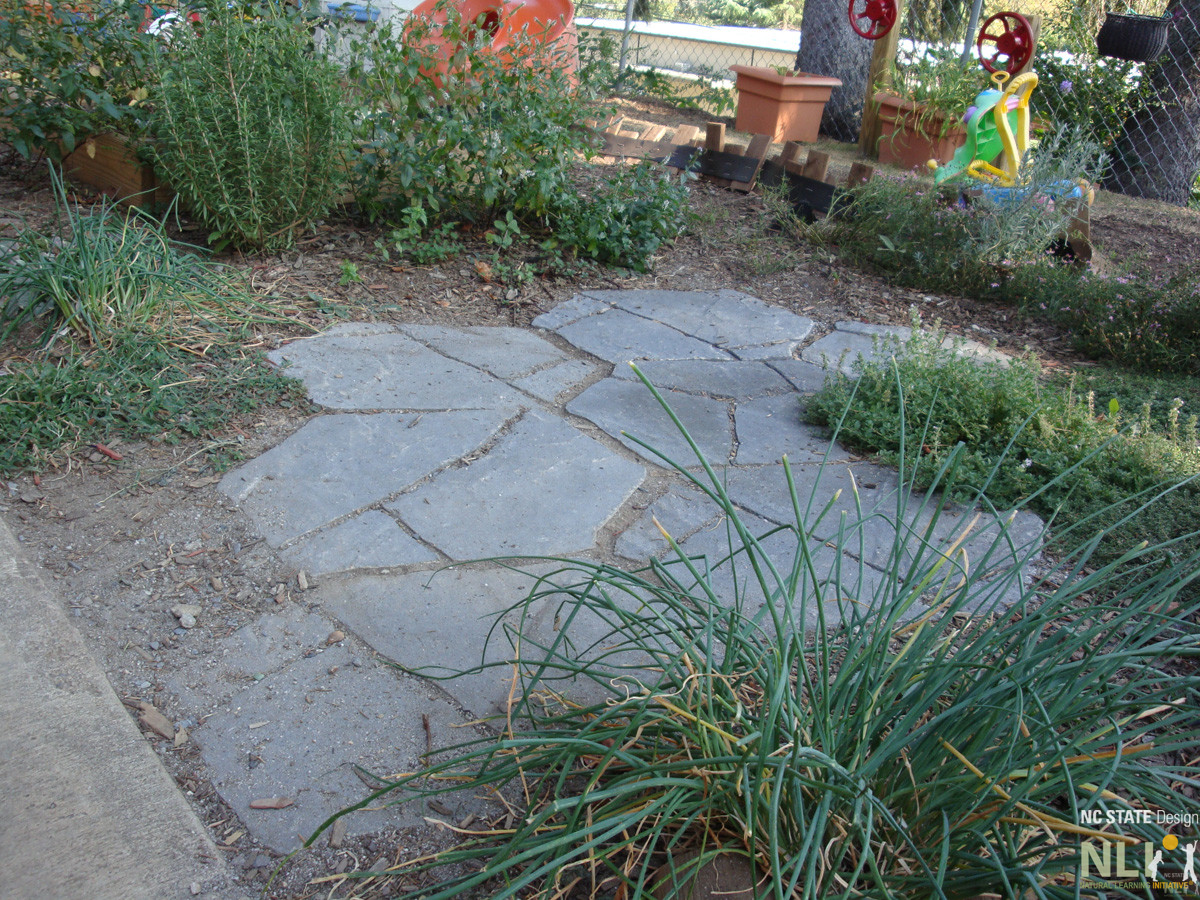
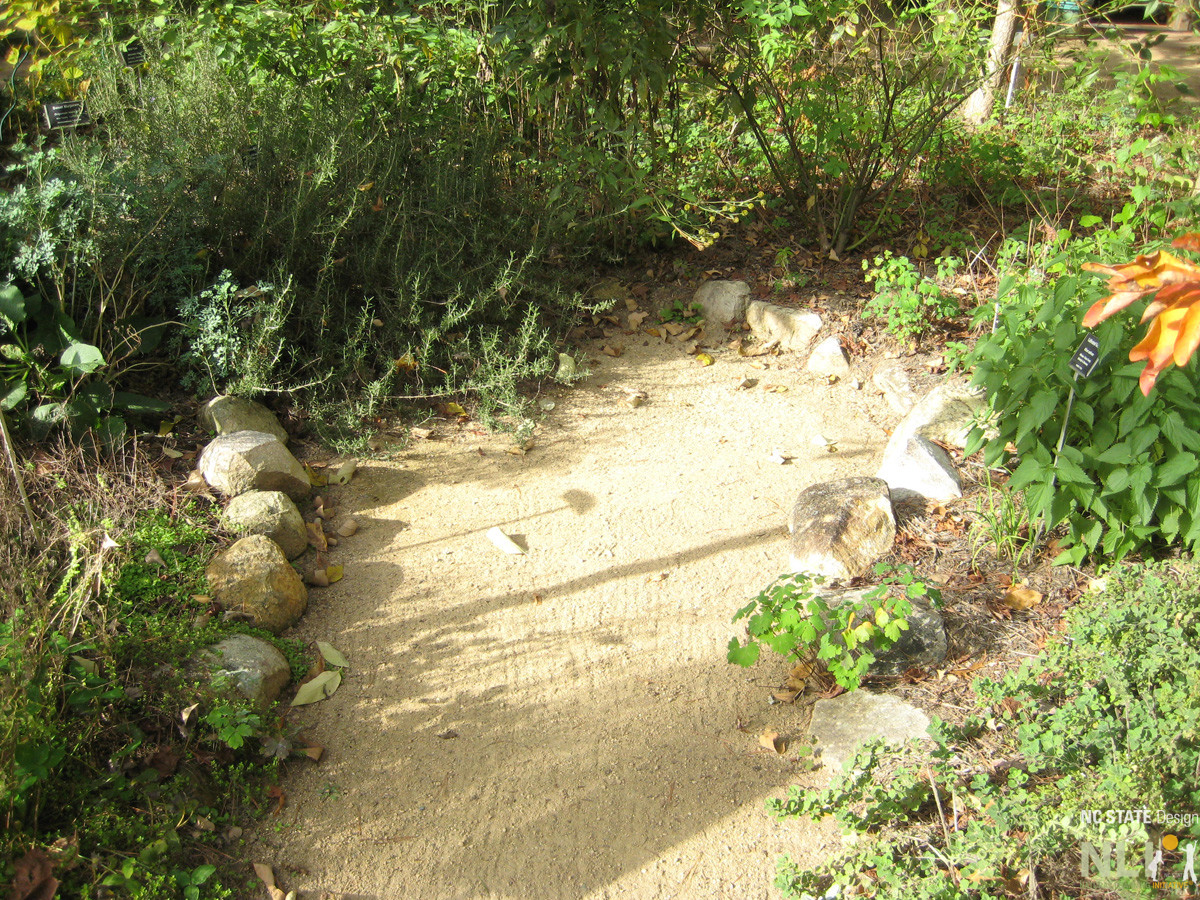
Sensory pathways can be constructed of smooth, flat, stepping stones or tree cookies with gaps wide enough for in-between planting. Stepping stones can be natural stone or concrete or made by children to include hand prints, leaf prints, shells, marbles, colored tile mosaics, or smooth glass. Glass blocks or clay bricks can be laid in the sensory pathway to add additional sensory richness and variety. Sensory pathways should be considered part of the larger pathway system and should not dead end. They can be installed as a narrow (18″-24″), short loop off the primary pathway (Figure 1) or a broad (36″-72″) connection between settings (Figure 2).

Keyhole gardens
Keyhole gardens provide an intimate space to rest while immersed in sensory plants. Keyhole gardens are shaped like a skeleton keyhole with a narrow entry and bulbous, interior space wide enough for a young child or two to sit and reach the plantings on either side (approximately 24” – 36” wide). Keyhole gardens can be installed as a subspace along a sensory path or be designed as a stand-alone setting.
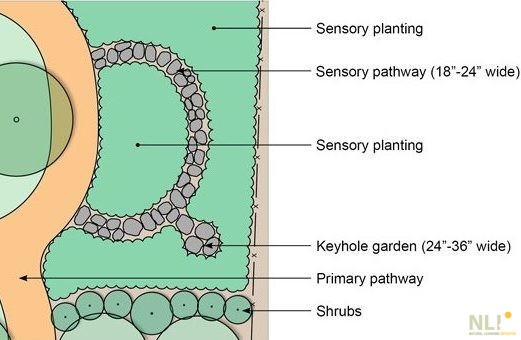
Figure 1: Sensory pathway as a short loop off primary pathway. Keyhole garden added along sensory pathway.
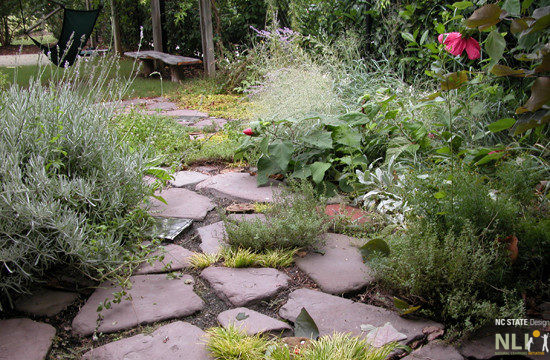
Figure 2. This wide, sensory pathway connects the classroom porch to a vine-covered pergola.
Sensory plantings
Sensory plantings should be hardy, vary in height, color, texture and scent, provide year-round sensory interest, and be planted within easy reach. Perennials, ground covers, ornamental grasses, small shrubs and edible plants can be incorporated, including the following:
For more information on pathways, check out the rest of the Green Desk pathways posts.
Perennials
- Canna Canna lily
- Dryopteris erythrosora Autumn fern
- Hemerocallis Daylily
- Rudbeckia ‘Goldsturm’ Black-eyed Susan
- Salvia guaranitica ‘Black and Blue’ Sage
- Sedum telphinum ‘Autumn Joy’ Stone crop
- Stachys byzantima Lamb’s ear
- Leucanthemum x superbum ‘Becky’ Becky’s daisy
Edibles
- Fragaria ananassa Strawberries
- Vaccinium asheii ‘Climax’ Blueberries
- Vaccinium asheii ‘Premier’ Blueberries
- Vaccinium asheii ‘Tifblue’ Blueberries
Groundcovers
- Liriope muscari ‘Variegata’ Monkey grass
- Acorus gramineus ‘Ogon’ Sweet flag
- Thymus vulgaris English thyme
- Thymus ‘Pink Chintz’ Creeping thyme
- Ajuga reptans Bugle weed
- Iberis sempervirens Candytuft
Ornamental grasses
Soft to the touch and provide year-round sensory interest
- Pennisetum alopecuroides ‘Hameln’ Fountain grass
- Pennisetum orientale ‘Karley Rose’ Fountain grass
- Muhlenbergia capillaris pink muhly grass
- Nassella tenuissima Mexican feather grass
Shrubs
- Lavandula stoechas Spanish lavender
- Lavandula x intermedia ‘Provence’ Provence lavender
- Rosmarinus officinalis Rosemary
- Buddleja ‘Blue Chip’ Butterfly bush
- Camellia sasanqua Fall-blooming camellia
- Cryptomeria japonica ‘Globosa Nana’ Dwarf Japanese cedar
- Gardenia ‘Frostproof’ Gardenia
- Loropetalum chinense ‘Daruma’ Daruma Chinses Fringe
- Spirea japonica ‘Goldmound’ Spirea